Polyclonal antibodies from serum of immunized animals.
- Read More
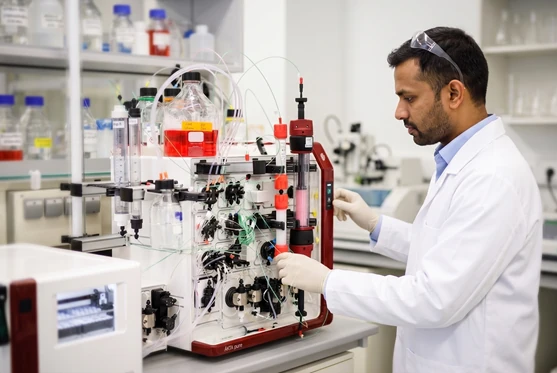
Antibody purification is the process of isolating antibodies from a complex mixture — such as serum, cell culture supernatant, or ascites fluid — so you get a clean, concentrated, functional antibody for research, diagnostic, or therapeutic use. Allele Life Sciences purifies antibodies using Protein A/G/L affinity, antigen-specific affinity, ion-exchange, and size-exclusion chromatography (SEC), with purity confirmed by HPLC and endotoxin levels verified by LAL assay.
Antibody
purification is a process used to
isolate and obtain highly purified
antibodies from a mixture of various
proteins and molecules, so you get a clean,
concentrated, functional antibody for
research, diagnostics, or therapeutic
use .
»
Protein A / Protein G / Protein L
Affinity Chromatography
»
Antigen-Specific Affinity Chromatography
»
Ammonium
Sulfate Precipitation
»
Ion Exchange Chromatography
»
Size
Exclusion Chromatography (SEC)
We are dedicated to customer service and can help you determine which purification process will provide you with the best balance among yield, purity, and cost.
Antibody
purification services can simplify the
process of extracting antibodies from
antiserum or hybridoma and cell
cultures. Immunoglobulins can be
purified via affinity binding to
immobilized protein A or protein G
particles or other means of affinity
chromatography. ion exchange or size
exclusion chromatography for further
purification, as well as endotoxin
removal for in vivo applications.
- Immuno-Affinity Purification
- IgY Purification
- Protein A purification or Protein G purification i
These services typically use affinity
chromatography techniques, such as
Protein A, G, or L columns, to
selectively bind antibodies based on
their Fc or light chain regions. For
higher specificity, antigen-specific
affinity purification can be used. Purified antibodies are commonly validated downstream by Western blot or ELISA, and can be paired with protein mass spectrometry for identity confirmation. See our full range of protein analysis services for related testing.
We Serve
- Research
& Development
- Health
diagnostics screening
-
Therapeutic
Development
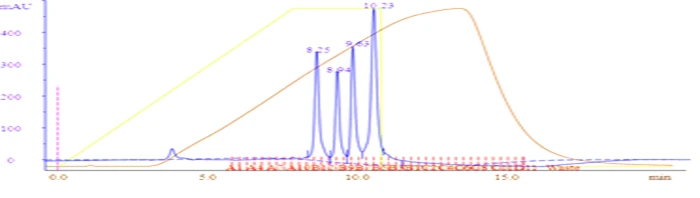
Note: Your delivered report includes your run's actual UV trace, yield, and purity data.
Antibody purification is the process of isolating antibodies from a complex mixture, such as serum, cell culture supernatant, or ascites fluid, to obtain a clean, concentrated, functional antibody for research, diagnostic, or therapeutic use. A standard workflow uses affinity chromatography (Protein A, G, or L) for initial capture, ion-exchange and hydrophobic interaction chromatography for intermediate impurity removal, and size-exclusion chromatography for final aggregate polishing.
Antibody purification is essential to remove host
cell contaminants, proteases, and endotoxins that cause assay background,
cross-reactivity, protein degradation, and in vivo toxicity.
The sample may not bind due to excessively high salt concentration, an inappropriate pH relative to the antibody's isoelectric point, or interfering buffer components. Column efficiency may be improved by optimizing column conditions and sample loading conditions.
Protein A binds most IgG subclasses with high affinity and is the standard choice for monoclonal IgG. Protein G offers broader species and subclass coverage, including antibodies that bind Protein A weakly. Protein L binds via the kappa light chain, making it useful for Fab fragments, scFv, and antibodies that do not bind Protein A or G well. Sample type and downstream use determine the best fit — share your antibody details for a recommendation.