
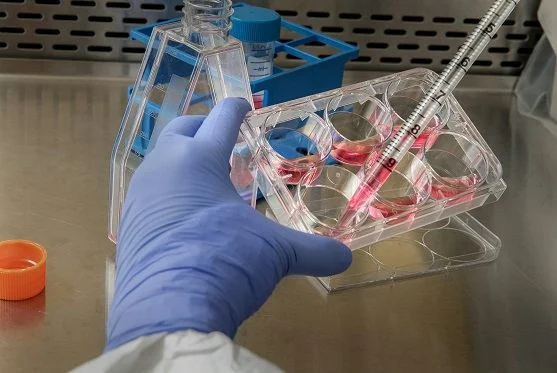
In-vitro cell culture is the practice of growing cells outside their natural environment under carefully controlled laboratory conditions. It is one of the most fundamental techniques in modern biology, letting researchers study living cells directly, screen drugs, model disease, and produce proteins in a reproducible, controllable system.
Why Researchers Rely on Cultured Cells
Working with cells in culture gives a level of control that isn't possible in an animal or clinical study. Temperature, nutrient availability, oxygen levels, and drug exposure can all be adjusted precisely, and the same cell population can be tested under multiple conditions side by side. This makes cell culture the workhorse technique behind drug screening, toxicology testing, and basic cell biology research.
Why It Matters in Research
Controlled Experimental Environment
Researchers can isolate variables — a single gene, drug, or growth factor — and study their effects without the complexity of a whole organism.
Reduced Reliance on Animal Models
In-vitro systems support the 3Rs principle (Replacement, Reduction, Refinement), offering ethical, cost-effective alternatives for early-stage research.
Scalability for High-Throughput Screening
Cell-based assays scale to 96-, 384-, or 1536-well formats, enabling rapid screening of thousands of compounds or genetic perturbations.
Disease Modeling
Patient-derived cells, stem cells, and 3D organoids allow researchers to model disease in a physiologically relevant context.
Foundation for Downstream Techniques
Cultured cells are the starting material for transfection, gene editing, protein expression, and many other molecular biology workflows.
Core Applications
- Drug discovery and screening — testing how candidate compounds affect cell viability, proliferation, or signaling before moving to animal studies
- Cytotoxicity and safety testing — assays like MTT or Trypan Blue exclusion quantify how a substance affects cell health
- Vaccine and biologics production — many vaccines and recombinant proteins are manufactured using cultured mammalian or insect cells
- Regenerative medicine — stem cell culture underpins research into tissue engineering and cell-based therapies
- Basic research — studying gene function, signaling pathways, and cell-cell interactions in a controlled system
Primary Cells vs. Immortalized Cell Lines
| Feature | Primary Cells | Immortalized Cell Lines |
|---|---|---|
| Origin | Directly isolated from tissue | Derived from primary cells, transformed |
| Lifespan | Limited (finite divisions) | Unlimited (continuous proliferation) |
| Physiological Relevance | High, closely mimics in-vivo behavior | Moderate, may diverge from native tissue |
| Common Use | Disease modeling, functional studies | High-throughput screening, protein production |
What a Well-Run Culture Lab Actually Involves
- Strict aseptic practice at every step of handling
- Consistent, well-characterized media and serum preparation
- Regular monitoring of cell morphology and confluency under an inverted microscope
- Sub-culturing at the correct density with accurate passage records
- Routine mycoplasma testing to catch contamination early
Where It Connects to Other Techniques
- Cultured cells are usually the starting material for flow cytometry experiments
- They also feed directly into western blot and protein expression workflows
- In-vitro pharmacology assays measuring drug response depend on healthy, well-characterized cultures
- Cell culture proficiency is considered a foundational skill across nearly every area of biotech research
Frequently Asked Questions
What is the difference between primary cells and cell lines?
Primary cells are isolated directly from tissue and have a limited lifespan, while cell lines are immortalized and can proliferate indefinitely, offering more consistency but sometimes less physiological accuracy.
Why is cell culture important in genetics research?
It provides a controlled system to study gene function, expression, and regulation, and is essential for techniques like gene editing, transfection, and reporter assays.
What are common cell lines used in research?
Widely used cell lines include HEK293 (human embryonic kidney), HeLa (cervical cancer), and CHO (Chinese hamster ovary) cells, each chosen for specific research applications.
How is contamination prevented in cell culture?
Through aseptic technique, laminar flow hoods, regular mycoplasma testing, and appropriate antibiotic use in media when necessary.
Conclusion
We run dedicated in-vitro cell culture services and training that cover the full workflow, from culture setup through cytotoxicity and viability assays.