
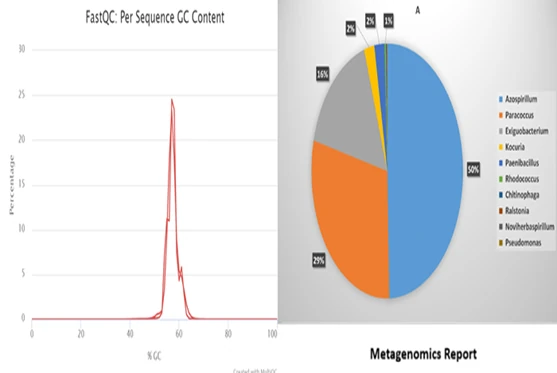
Metagenomic sequencing profiles the entire microbial population in a sample directly from its DNA — bacteria, viruses, fungi, and other microorganisms, known and unknown alike — without needing to culture a single organism first. That's what makes it possible to see a community's full diversity, not just the fraction that happens to grow on a plate.
Amplicon vs. Shotgun Metagenomics
There are two broad approaches, and picking the right one depends on the question being asked. 16S rRNA sequencing targets bacteria, 18S rRNA sequencing targets eukaryotic microbes, and ITS sequencing targets fungi — all of these are amplicon approaches, useful when you want a taxonomic snapshot of who's present. Shotgun metagenomics, by contrast, sequences everything in the sample using next-generation sequencing (NGS), providing species-level taxonomic annotation alongside functional profiling, gene prediction, and antimicrobial resistance gene identification.
What Shotgun Metagenomics Adds
- Species-level taxonomic annotation, not just genus-level
- Functional profiling of what the microbial community can actually do metabolically
- Gene prediction across the full metagenome
- Antimicrobial resistance gene identification
- A clearer picture of microbial interactions within whole communities
The Analysis Pipeline
| Step | What It Produces |
|---|---|
| Metagenome Assembly | Reconstructed genomic fragments from short sequencing reads |
| Gene Prediction | Identification of coding regions within assembled sequences |
| Taxonomy Annotation | Assignment of sequences to known or novel taxa |
| Antibiotic Resistance Gene Annotation | Flagging of resistance genes present in the community |
When to Choose Amplicon Sequencing First
Clients with limited sample or budget often benefit from amplicon sequencing first — it's a faster, lower-cost way to assess the quality and diversity of a sample before committing to deeper shotgun sequencing. If the amplicon data shows a community worth investigating further, shotgun sequencing is the natural next step.
Applications
- Environmental and soil microbiome studies
- Human and animal gut microbiome research
- Food and water safety monitoring
- Antimicrobial resistance surveillance
Frequently Asked Questions
What is metagenomic sequencing?
Metagenomic sequencing profiles the entire microbial population in a sample directly from its DNA, using next-generation sequencing and bioinformatics tools to identify known and unknown bacteria, viruses, fungi, and other microorganisms.
What's the difference between amplicon and shotgun metagenomics?
Amplicon sequencing (16S, 18S, or ITS) targets a specific taxonomic marker gene for a faster, lower-cost community snapshot. Shotgun metagenomics sequences everything in the sample, providing species-level taxonomy, functional profiling, and antimicrobial resistance gene identification.
Should I start with amplicon or shotgun sequencing?
Clients with limited sample or budget often benefit from amplicon sequencing first, to assess sample quality and diversity before committing to deeper, more comprehensive shotgun sequencing.
What does a shotgun metagenomics analysis include?
A typical pipeline includes metagenome assembly, gene prediction, taxonomy annotation, and antibiotic resistance gene annotation and analysis.