
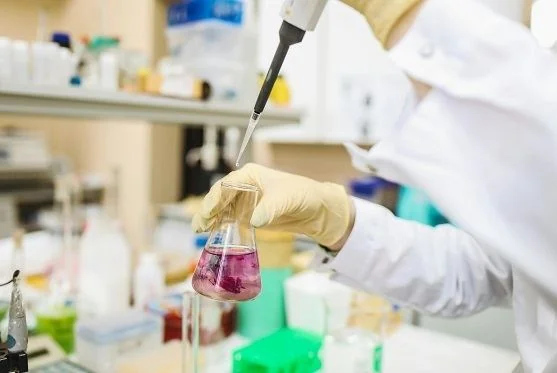
Biotech, pharmaceutical, nutraceutical and contract research organisations (CROs) continue to hire life science graduates, but they want more than a degree. Employers increasingly look for hands-on experience with specific bioanalytical techniques, an understanding of regulated laboratory work and the ability to handle data confidently.
Whether you are a student, a fresh graduate or a scientist looking to move into industry, this guide covers the bioanalytical skills that stand out on a CV in 2026, why each matters and how to build them.
1. LC-MS/MS and Mass Spectrometry
Liquid chromatography–tandem mass spectrometry is the backbone of small-molecule bioanalysis, pharmacokinetic studies, metabolite identification and, increasingly, peptide and protein analysis. Employers value candidates who understand sample preparation (protein precipitation, liquid–liquid and solid-phase extraction), method development, MRM optimisation and troubleshooting matrix effects.
2. HPLC and UPLC
HPLC remains the most widely used analytical technique in pharma and herbal quality control labs. Key skills include method development, column and mobile phase selection, system suitability testing, peak integration and routine troubleshooting. Experience with chromatography data systems is a strong advantage.
3. ELISA and Ligand-Binding Assays
Ligand-binding assays are essential for biologics, biomarkers and immunogenicity testing. Beyond classic ELISA, familiarity with newer platforms such as electrochemiluminescence and ultrasensitive immunoassays is a plus. Employers look for skills in standard curve fitting (4PL/5PL), plate reader operation and assay troubleshooting.
4. qPCR and Digital PCR
Real-time PCR is central to gene expression analysis, diagnostics, cell and gene therapy, and biodistribution studies. Valuable skills include RNA isolation, primer and probe design, efficiency testing, melt curve analysis, multiplexing and data analysis following MIQE guidelines. Digital PCR experience is increasingly sought for absolute quantification.
5. Flow Cytometry
Flow cytometry is in high demand across immunology, oncology and cell therapy. Employers want candidates who can design multicolour panels, run compensation or spectral unmixing, build sound gating strategies and perform assays such as immunophenotyping and Annexin V/PI apoptosis analysis.
6. Cell Culture and Cell-Based Assays
Aseptic cell culture remains a core requirement. Industry labs value experience with cell line authentication, mycoplasma testing, cytotoxicity assays (MTT, resazurin, LDH), reporter gene assays and potency assays for biologics. Exposure to 3D cultures and organoids is a growing advantage.
7. Protein Purification and Characterisation
With biologics dominating drug pipelines, skills in recombinant protein expression, FPLC purification (affinity, ion exchange and size exclusion chromatography), SDS-PAGE, Western blotting and capillary electrophoresis-based methods are highly valued, especially in biopharma and biosimilar companies.
8. Method Validation and Regulatory Knowledge
Knowing how to run an assay is not enough; industry needs to prove it works. Understanding ICH Q2(R2) analytical method validation and ICH M10 bioanalytical method validation, including accuracy, precision, specificity, range and stability, sets candidates apart.
9. GLP, GMP and Data Integrity
Regulated labs follow Good Laboratory Practice (GLP) and Good Manufacturing Practice (GMP). Employers look for awareness of SOPs, equipment qualification, documentation practices, ALCOA+ data integrity principles, audit trails and 21 CFR Part 11. Candidates who already think in a documented, audit-ready way need far less training.
10. Data Analysis, Statistics and Digital Skills
Modern instruments generate huge datasets. Skills that increasingly appear in job descriptions include:
- Statistical analysis and curve fitting with software such as GraphPad Prism.
- Basic programming in Python or R for data processing and visualisation.
- Working with LIMS (laboratory information management systems) and electronic lab notebooks.
- Familiarity with lab automation, such as liquid handling robots.
- Awareness of how AI and machine learning tools are being used in data analysis.
Specialised Skills for Herbal and Nutraceutical Labs
For roles in natural products, Ayurveda, nutraceutical and functional food companies, employers also look for:
- Phytochemical screening and HPTLC fingerprinting.
- GC-MS and LC-MS profiling of plant extracts.
- Antioxidant assays (DPPH, ABTS, FRAP) and enzyme inhibition assays.
- Bioavailability and in vitro digestion studies.
Soft Skills Employers Value
- Troubleshooting: Working out why an assay failed and how to fix it.
- Attention to detail: Accurate pipetting, calculations and record-keeping.
- Scientific communication: Writing clear reports and presenting results.
- Teamwork: Working across QA, operations and client teams, especially in CROs.
- Adaptability: Learning new instruments, methods and software quickly.
How to Build These Skills
- Choose hands-on training programmes and workshops that give real instrument time, not just theory.
- Seek internships or project placements in CROs, pharma or biotech labs.
- Learn the regulatory side: read ICH guidelines and GLP principles.
- Practise data analysis with real datasets and learn a programming language.
- Document your experience clearly on your CV: name the techniques, instruments and assays you have performed.
- Build a small portfolio of projects, reports or posters that show your skills.
Frequently Asked Questions
Which bioanalytical technique is most in demand?
LC-MS/MS and HPLC are among the most widely required, followed closely by ELISA, qPCR, flow cytometry and cell-based assays, depending on the sector.
Do I need GLP or GMP knowledge for a lab job?
For most industry roles, especially in CROs and pharma, an understanding of GLP or GMP, documentation and data integrity is highly valued and often required.
Is programming useful for bioanalytical scientists?
Yes. Basic Python or R skills help with data processing, statistics and visualisation, and are increasingly listed in job descriptions.
How can freshers gain hands-on lab experience?
Through practical training programmes, internships, research projects and workshops that offer direct instrument time.
Conclusion
In 2026, the life science professionals who stand out combine hands-on bioanalytical expertise with regulatory awareness and strong data skills. Mastering techniques such as LC-MS/MS, HPLC, ELISA, qPCR, flow cytometry and cell-based assays, together with method validation, GLP and data integrity, opens doors across biotech, pharma, CROs and nutraceutical companies. Start building practical experience today to stay ahead in a competitive job market.