
Phytosterols and organosulfur compounds are among the most studied bioactive ingredients in functional foods and nutraceuticals. Phytosterols are known for lowering LDL cholesterol, while organosulfur compounds from garlic, onion and cruciferous vegetables are researched for cardiovascular, antioxidant and chemopreventive effects.
But a compound can only work if it reaches its target. Both groups face major bioavailability challenges: phytosterols are poorly absorbed, and many organosulfur compounds are unstable and rapidly transformed. This guide explains how to evaluate their bioaccessibility and bioavailability using in vitro, cell-based and in vivo methods.
Bioaccessibility vs Bioavailability vs Bioactivity
- Bioaccessibility: The fraction of a compound released from the food or supplement matrix during digestion and available for absorption.
- Bioavailability: The fraction that is absorbed and reaches systemic circulation or target tissues.
- Bioactivity: The biological effect produced once the compound or its metabolites reach their target.
A complete evaluation looks at all three, starting with simple in vitro models and progressing to in vivo studies.
Phytosterols: Why Bioavailability Is Low
Phytosterols such as β-sitosterol, campesterol and stigmasterol, and their saturated forms, phytostanols, are structurally similar to cholesterol. They lower cholesterol by competing with it for incorporation into intestinal mixed micelles, reducing cholesterol absorption.
Their own absorption is very low, typically less than 5% compared with roughly half for cholesterol. Phytosterols enter intestinal cells through the NPC1L1 transporter, but most are pumped straight back into the gut by the ABCG5 and ABCG8 transporters. Their poor water solubility and high melting point also limit micellar solubilisation.
Factors Affecting Phytosterol Bioaccessibility
- Chemical form: free sterols, sterol esters and stanols behave differently.
- Food matrix: fat-containing foods such as spreads, milk and yoghurt improve micellar solubilisation.
- Dose and intake with meals.
- Formulation: esterification, emulsions, nanoparticles and other delivery systems improve dispersion.
Organosulfur Compounds: A Moving Target
Garlic and Allium Compounds
Intact garlic contains alliin. When garlic is crushed or chopped, the enzyme alliinase converts alliin to allicin. Allicin is highly unstable and quickly breaks down into diallyl sulfide, diallyl disulfide, diallyl trisulfide, ajoene and vinyldithiins. In the body, allicin is rapidly metabolised, and allyl methyl sulfide in breath is used as a marker of allicin bioavailability.
Aged garlic extract is rich in S-allylcysteine (SAC), a water-soluble, stable compound with much higher and more predictable bioavailability.
Cruciferous Vegetables and Isothiocyanates
Broccoli and other Brassica vegetables contain glucosinolates such as glucoraphanin. The plant enzyme myrosinase converts it into sulforaphane when the plant is chewed or chopped. Cooking can inactivate myrosinase, sharply reducing sulforaphane formation, although gut bacteria can convert some glucosinolates. Absorbed sulforaphane is metabolised through the mercapturic acid pathway and excreted in urine as conjugates.
Factors Affecting Organosulfur Bioavailability
- Enzyme activity (alliinase or myrosinase) and its inactivation by heat or stomach acid.
- Processing method: crushing, cooking, drying, oil maceration or ageing.
- Formulation: enteric-coated garlic tablets protect alliinase from stomach acid.
- Chemical instability and volatility of the active compounds.
- Individual differences in gut microbiota.
In Vitro Methods for Evaluating Bioavailability
Simulated Gastrointestinal Digestion
Standardised in vitro digestion models simulate the oral, gastric and intestinal phases. The INFOGEST static digestion protocol is the most widely used harmonised method, with defined enzymes, bile, pH and timing. After digestion:
- For phytosterols: The micellar fraction is separated by ultracentrifugation or filtration and analysed to calculate bioaccessibility.
- For organosulfur compounds: The stability and transformation of allicin, sulforaphane or SAC is tracked across each phase.
Dynamic models that mimic peristalsis and gradual pH change offer greater physiological realism.
Caco-2 Cell Models
Caco-2 cells differentiate into an intestinal-like monolayer and are the standard in vitro model for absorption. They are used to measure:
- Cellular uptake of compounds from the digested micellar fraction.
- Transport across the monolayer as apparent permeability (Papp).
- The role of transporters such as NPC1L1 and ABCG5/G8 for phytosterols.
Combining in vitro digestion with Caco-2 uptake gives a more realistic picture than either method alone. PAMPA assays offer a quick, cell-free screen of passive permeability.
In Vivo and Clinical Evaluation
- Pharmacokinetic studies: Measure Cmax, Tmax and AUC in plasma after dosing.
- Phytosterol absorption markers: Plasma campesterol-to-cholesterol and sitosterol-to-cholesterol ratios reflect intestinal sterol absorption.
- Breath analysis: Allyl methyl sulfide in breath indicates how much allicin was formed and absorbed from garlic products.
- Urinary metabolites: Sulforaphane conjugates or SAC metabolites in urine estimate absorbed dose.
- Stable isotope methods: Labelled compounds allow precise tracking of absorption and excretion.
Analytical Techniques
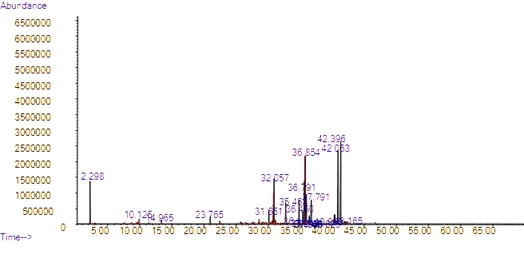
- GC-FID and GC-MS: The standard for phytosterols after saponification and derivatisation, and for volatile garlic sulfides.
- HPLC-UV: Quantifies alliin, allicin and S-allylcysteine in raw materials and products.
- LC-MS/MS: Highly sensitive detection of phytosterols, sulforaphane and their metabolites in plasma, urine and digestion samples.
Organosulfur compounds are heat-sensitive, so GC methods must be checked for thermal breakdown products, and samples should be kept cold and analysed quickly. All quantitative methods should be validated according to ICH Q2(R2).
Strategies to Improve Bioavailability
- Esterify phytosterols and deliver them in fat-containing foods or emulsions.
- Use nanoemulsions, liposomes or solid lipid nanoparticles for poorly soluble sterols.
- Use enteric coatings to protect alliinase and allicin formation in garlic supplements.
- Add active myrosinase, for example from mustard seed, to cooked or processed broccoli products.
- Choose stable forms such as S-allylcysteine or stabilised sulforaphane.
Frequently Asked Questions
Why are phytosterols poorly absorbed?
They have low water solubility, and most phytosterols taken up by intestinal cells are pumped back into the gut by ABCG5 and ABCG8 transporters.
What is the difference between bioaccessibility and bioavailability?
Bioaccessibility is the amount released from food during digestion; bioavailability is the amount that is absorbed and reaches the bloodstream or tissues.
How is allicin bioavailability measured?
Commonly by measuring allyl methyl sulfide, an allicin metabolite, in breath after consuming garlic products.
Does cooking affect sulforaphane bioavailability?
Yes. Cooking can inactivate myrosinase, the enzyme that forms sulforaphane, greatly reducing its bioavailability.
Conclusion
Phytosterols and organosulfur compounds have strong health potential, but their benefits depend on how much actually reaches the body. A stepwise approach, from INFOGEST in vitro digestion and Caco-2 absorption models to validated GC-MS and LC-MS/MS analysis and in vivo pharmacokinetics, gives a reliable picture of bioavailability and guides the formulation of more effective functional foods and nutraceuticals.