
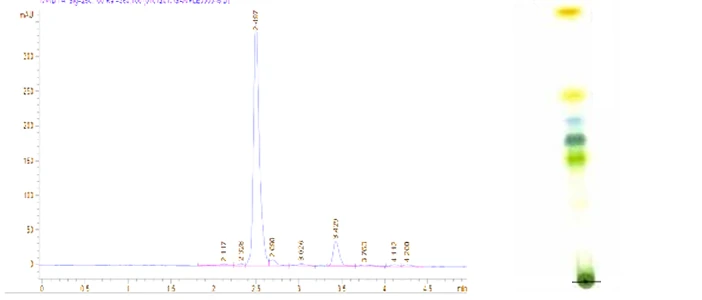
Plant extracts are complex mixtures of hundreds of compounds, and their composition changes with species, geography, harvest time, plant part, processing and storage. Phytochemical profiling identifies and measures the compounds in an extract, while phytochemical fingerprinting creates a characteristic chemical pattern that confirms identity and consistency.
Together, they are essential for herbal drug standardisation, nutraceutical and cosmetic quality control, detecting adulteration and supporting regulatory submissions. This guide explains the main techniques, from simple screening tests to HPTLC, HPLC, GC-MS and LC-MS fingerprinting.
Why Phytochemical Profiling and Fingerprinting Matter
- Authentication: Confirms the correct plant species and part.
- Adulteration detection: Reveals substitution, dilution or spiking with synthetic compounds.
- Batch-to-batch consistency: Ensures every batch of extract or finished product has the same chemical profile.
- Efficacy and safety: Links active compounds to biological activity and flags harmful constituents.
- Regulatory compliance: Pharmacopoeias and guidelines, such as those of WHO, the Indian Pharmacopoeia and the Ayurvedic Pharmacopoeia of India, call for chromatographic identity and quality tests.
Step 1: Sample Preparation and Extraction
Reliable profiling starts with authenticated plant material and a reproducible extraction method.
- Authenticate the raw material botanically and keep a voucher specimen.
- Dry, grind and store the material consistently.
- Choose solvents to suit the target compounds, from non-polar hexane to polar methanol and water.
- Use a standardised extraction method such as maceration, Soxhlet, ultrasound-assisted or microwave-assisted extraction.
- Record extraction yield and filter extracts before analysis.
Step 2: Preliminary Phytochemical Screening
Simple qualitative tests give a quick overview of the major compound classes present:
- Alkaloids: Mayer's, Dragendorff's and Wagner's tests.
- Flavonoids: Shinoda test and alkaline reagent test.
- Phenols and tannins: Ferric chloride test.
- Saponins: Foam test.
- Terpenoids and steroids: Salkowski and Liebermann–Burchard tests.
- Glycosides: Keller–Killiani test for cardiac glycosides.
Step 3: Quantitative Phytochemical Analysis
- Total phenolic content: Folin–Ciocalteu method, expressed as gallic acid equivalents.
- Total flavonoid content: Aluminium chloride method, expressed as quercetin or rutin equivalents.
- Total alkaloid, tannin and saponin content: Gravimetric or spectrophotometric methods.
These totals are useful for comparing extracts, but they do not identify individual compounds, which is where fingerprinting comes in.
Step 4: Chromatographic Fingerprinting Techniques
TLC and HPTLC Fingerprinting
High-performance thin-layer chromatography (HPTLC) is one of the most widely used tools for herbal identification. Several samples and reference standards run side by side on one plate, and bands are visualised under UV light or after derivatisation. Rf values and colours create a visual fingerprint, and densitometric scanning allows quantification of marker compounds. HPTLC is fast, cost-effective and recognised in many pharmacopoeias.
HPLC and UPLC Fingerprinting
HPLC with a PDA (photodiode array) detector separates compounds with high resolution and records their UV spectra. A chromatographic fingerprint is created by comparing peak patterns across batches, often using similarity analysis against a reference fingerprint. HPLC is also the standard method for quantifying marker compounds.
GC-MS Analysis
Gas chromatography–mass spectrometry is ideal for volatile and semi-volatile compounds, such as essential oils, terpenes and fatty acids. Compounds are identified by matching mass spectra against libraries such as NIST, along with retention indices.
LC-MS and LC-MS/MS Profiling
Liquid chromatography–mass spectrometry, especially high-resolution LC-QTOF and Orbitrap systems, provides the most comprehensive phytochemical profiling. It identifies compounds by accurate mass and fragmentation patterns, making it the method of choice for untargeted metabolomics, novel compound discovery and detecting trace adulterants.
Spectroscopic Fingerprinting
FTIR and NIR spectroscopy offer rapid, whole-extract fingerprints with minimal sample preparation, useful for raw material screening. NMR provides detailed structural information and highly reproducible metabolic fingerprints.
Step 5: Marker Compounds
Marker compounds anchor a fingerprint to measurable quality standards:
- Active markers: Compounds that contribute to the biological effect, such as curcuminoids in turmeric or withanolides in ashwagandha.
- Analytical markers: Characteristic compounds used for identification and quality control, even if their activity is not established.
Quantitative marker methods should be validated according to ICH Q2(R2) for specificity, accuracy, precision, range and quantitation limits.
Step 6: Chemometric Analysis
Fingerprints contain large amounts of data. Chemometric tools turn them into clear quality decisions:
- Similarity analysis: Compares each batch with a reference fingerprint.
- Principal component analysis (PCA): Groups samples by chemical similarity and highlights outliers.
- Hierarchical cluster analysis (HCA): Classifies samples by species, origin or quality.
- PLS-DA and other classification models: Help distinguish authentic from adulterated samples.
Choosing the Right Technique
- For routine identity testing and quality control, HPTLC and HPLC fingerprints are practical and widely accepted.
- For essential oils and volatile compounds, choose GC-MS.
- For in-depth profiling, compound discovery and adulterant detection, use LC-MS or LC-MS/MS.
- For rapid raw material screening, consider FTIR or NIR with chemometrics.
- Combining two or more techniques gives the strongest evidence of identity and quality.
Frequently Asked Questions
What is the difference between phytochemical profiling and fingerprinting?
Profiling identifies and quantifies the compounds in a plant extract, while fingerprinting creates a characteristic overall chemical pattern used to confirm identity and consistency.
Why is HPTLC used for herbal fingerprinting?
HPTLC is fast, cost-effective, analyses many samples in parallel, gives a clear visual fingerprint and is widely accepted in pharmacopoeias.
When should GC-MS be used for plant extracts?
GC-MS is best for volatile and semi-volatile compounds, such as those in essential oils, terpenes and fatty acids.
How is adulteration detected in herbal products?
By comparing chromatographic or spectroscopic fingerprints with authenticated reference samples, quantifying marker compounds, and using chemometric methods such as PCA.
Conclusion
Phytochemical profiling and fingerprinting turn complex plant extracts into clear, measurable quality standards. Combining screening tests, HPTLC, HPLC, GC-MS or LC-MS fingerprints, validated marker compound analysis and chemometrics ensures herbal medicines, nutraceuticals and botanical cosmetics are authentic, consistent, safe and ready for regulatory review.