
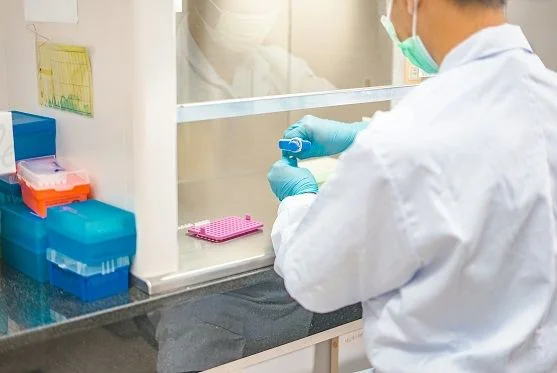
High-quality RNA is the starting point for qPCR, RNA-seq, microarrays and other gene expression studies. With soft tissues such as liver or cultured cells, RNA isolation is routine. But many tissues are far harder: tough, fibrous, fatty, rich in RNases, packed with plant polysaccharides, mineralised, or chemically fixed.
This guide explains why these tissues are difficult and gives practical RNA extraction tips for each, plus the RNA quality control checks that matter most.
Why Some Tissues Are Difficult for RNA Extraction
- Fibrous tissues (heart, skeletal muscle, skin, tendon, cartilage): rich in collagen and connective tissue, which resist homogenisation.
- Fatty tissues (adipose, brain, breast): high lipid content traps RNA and interferes with phase separation and columns.
- RNase-rich tissues (pancreas, spleen): very high endogenous RNase activity degrades RNA within minutes.
- Plant tissues: rigid cell walls, polysaccharides and polyphenols co-purify with RNA and inhibit downstream enzymes.
- Bone and teeth: a hard mineral matrix and low cell content make lysis difficult and yields low.
- FFPE tissues: formalin cross-linking and fragmentation produce degraded, chemically modified RNA.
- Small biopsies and low-input samples: very little starting material, so every loss matters.
Step 1: Protect RNA from the Moment of Collection
- Process tissue immediately, or snap-freeze in liquid nitrogen and store at −80 °C.
- Use an RNA stabilisation reagent such as RNAlater, cutting tissue into thin pieces (about 0.5 cm or less) so the reagent penetrates quickly.
- Never let frozen tissue thaw before it is in lysis buffer.
- Work RNase-free: clean benches and pipettes with RNase decontamination solution and use certified RNase-free tubes and tips.
Step 2: Choose the Right Homogenisation Method
Complete tissue disruption is the single biggest factor in RNA yield from difficult samples.
- Cryogenic grinding: Grind tissue to a fine powder under liquid nitrogen with a mortar and pestle or cryo-mill. Ideal for plants, bone, skin and other tough samples.
- Bead-beating homogenisers: Ceramic or stainless-steel beads give fast, reproducible lysis of fibrous tissues in sealed tubes.
- Rotor-stator homogenisers: Effective for larger samples of soft and moderately tough tissue.
- Proteinase K digestion: Helps release RNA from collagen-rich tissues such as muscle, heart and skin.
Step 3: Pick an RNA Extraction Method
- Phenol–guanidinium (TRIzol-type) extraction: Strong denaturation and RNase inactivation make it the first choice for fatty, fibrous and RNase-rich tissues.
- Silica spin-column kits: Fast and clean, with on-column DNase treatment; often combined with a TRIzol lysis step for difficult samples.
- Magnetic bead-based extraction: Scalable and automation-friendly for high-throughput labs.
- CTAB-based extraction: The standard for polysaccharide- and polyphenol-rich plant tissues.
Tissue-Specific Tips
Fibrous Tissues: Muscle, Heart and Skin
Grind under liquid nitrogen or use bead beating, then add a proteinase K digestion step. Use enough lysis buffer for the tissue weight to avoid incomplete lysis and low yields.
Fatty Tissues: Adipose and Brain
Use a phenol–guanidinium reagent designed for lipid-rich tissue. After homogenisation, centrifuge and remove the fat layer before phase separation. Expect low yields from adipose tissue, so start with more material. Snap-freezing generally works better than stabilisation reagents for fatty tissue.
RNase-Rich Tissues: Pancreas and Spleen
Speed is critical. Place the tissue into stabilisation reagent or lysis buffer within seconds of excision, use small pieces, and include a reducing agent such as β-mercaptoethanol in the lysis buffer to help inactivate RNases.
Plant Tissues
Use CTAB buffer with PVP (polyvinylpyrrolidone) to remove polyphenols, and β-mercaptoethanol to prevent oxidation. Lithium chloride (LiCl) precipitation removes polysaccharides and selectively recovers RNA. Seeds, woody tissues and fruits often need extra clean-up steps.
Bone and Teeth
Remove soft tissue and marrow if not required, then pulverise frozen bone in a cryo-mill. Process quickly, as RNA in bone degrades fast, and use phenol–guanidinium lysis followed by column clean-up.
FFPE Tissue
Deparaffinise sections, digest with proteinase K, and use a heat step to partially reverse formalin cross-links. Use dedicated FFPE RNA kits, choose short amplicons for qPCR, and assess quality with DV200 rather than RIN alone.
Low-Input Samples and Biopsies
Use micro-scale kits with small elution volumes, and add an RNA-free carrier such as glycogen during precipitation to improve recovery.
Step 4: Remove Genomic DNA
Genomic DNA contamination causes false positives in qPCR. Use on-column or in-solution DNase I treatment, design primers that span exon–exon junctions, and include no-reverse-transcriptase (no-RT) controls.
Step 5: RNA Quality Control
- Purity (A260/280): About 2.0 indicates RNA free of significant protein contamination.
- Purity (A260/230): Ideally around 2.0–2.2; low values signal guanidine salts, phenol or carbohydrates.
- Concentration: Fluorometric methods such as Qubit are more accurate than absorbance for low-concentration samples.
- Integrity (RIN or RQN): Measured on a Bioanalyzer or TapeStation. RIN of 7 or above is commonly targeted for RNA-seq and gene expression work.
- DV200: The percentage of fragments above 200 nucleotides; the preferred quality metric for FFPE and degraded RNA.
Troubleshooting Common Problems
- Low yield: Incomplete homogenisation, too little lysis buffer, or too little starting tissue.
- Degraded RNA: Delayed processing, thawing before lysis, or RNase contamination.
- Low A260/230: Carry-over of salts or phenol; add an extra wash or re-precipitate.
- Inhibited qPCR or cDNA synthesis: Polysaccharide, polyphenol or salt contamination; clean up with a column or LiCl precipitation.
Frequently Asked Questions
What is the best method for RNA isolation from difficult tissues?
Thorough homogenisation (cryogenic grinding or bead beating) followed by phenol–guanidinium (TRIzol-type) extraction and column clean-up works for most challenging tissues.
How do you extract RNA from adipose tissue?
Use a lipid-tissue phenol–guanidinium reagent, remove the fat layer after homogenisation, and start with more tissue to compensate for low yield.
What is a good RIN value?
A RIN of 7 or above is generally considered good for gene expression studies. For FFPE samples, DV200 is a more useful metric.
How can I remove polysaccharides from plant RNA?
Use a CTAB-based extraction with PVP, followed by lithium chloride precipitation.
Conclusion
RNA isolation from challenging tissues succeeds when each step is matched to the sample: fast stabilisation, complete homogenisation, the right extraction chemistry, DNase treatment and rigorous RNA quality control. With these tissue-specific strategies, even fibrous, fatty, plant, bone and FFPE samples can deliver high-quality RNA ready for qPCR and RNA-seq.