
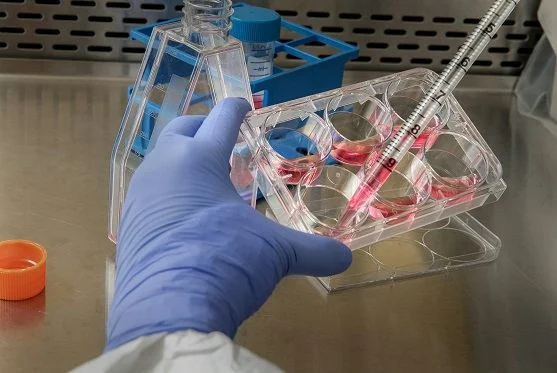
Cell line authentication confirms that the cells in your flask are exactly what the label says they are. It sounds basic, yet misidentified and cross-contaminated cell lines remain one of the biggest causes of irreproducible research. Studies have estimated that a significant share of cell lines in use, often quoted at around one in five or more, are misidentified or contaminated, with HeLa cells the most notorious culprit.
Using the wrong cells can invalidate years of work, lead to retracted papers and waste funding. This guide explains how to validate cell line authenticity with STR profiling, species testing and mycoplasma testing, and how to build authentication into routine lab practice.
Why Cell Line Authentication Matters
- Research reproducibility: Results from misidentified cells cannot be trusted or repeated.
- Publication requirements: Many journals now ask for STR profiling or authentication data before accepting cell-based studies.
- Funding requirements: Funders such as the US NIH expect authentication of key biological resources in grant applications.
- Biopharma and regulatory compliance: Cell banks used for drug development and biologics manufacturing must be fully characterised.
- Cost savings: Testing is far cheaper than repeating months of experiments.
Common Causes of Cell Line Problems
- Cross-contamination: Fast-growing cells, such as HeLa, overgrow the original culture.
- Mislabelling: Tubes or flasks swapped during handling or freezing.
- Genetic drift: High passage numbers change genotype and behaviour over time.
- Microbial contamination: Mycoplasma infects cultures without visible signs.
- Unverified sources: Cells obtained from other labs rather than recognised cell banks.
STR Profiling: The Gold Standard for Human Cell Lines
Short tandem repeat (STR) profiling is the internationally recognised method for authenticating human cell lines. STRs are short, repeated DNA sequences whose lengths vary widely between individuals, giving each cell line a unique genetic fingerprint.
How STR Analysis Works
- Extract genomic DNA from the cell line.
- Amplify a panel of STR loci plus the amelogenin sex marker using multiplex PCR with fluorescent primers.
- Separate the products by capillary electrophoresis.
- Call the alleles at each locus to create the STR profile.
- Compare the profile against reference databases and the original donor profile.
Interpreting STR Results
STR profiling of human cell lines follows the ANSI/ATCC ASN-0002 consensus standard. Profiles are compared using a percentage match score, such as the Tanabe algorithm:
- 80% match or higher: The cell lines are considered related, from the same donor.
- Between about 56% and 80%: Ambiguous; further testing is recommended.
- Below about 56%: The cell lines are considered unrelated.
Extra alleles at several loci can indicate a mixed culture or cross-contamination. Loss of alleles at some loci may reflect genetic instability, common in cancer cell lines.
Check Reference Databases
- Cellosaurus: A comprehensive cell line knowledge resource, with the CLASTR tool for STR similarity searches.
- Cell bank databases: ATCC, DSMZ, ECACC, JCRB and other repositories publish reference STR profiles.
- ICLAC Register of Misidentified Cell Lines: Lists known misidentified lines. Always check it before starting work with a new cell line.
Authenticating Non-Human Cell Lines
Human STR panels do not work for most other species. Options include:
- Species-specific STR panels: Validated panels exist for mouse and some other species, such as dog.
- DNA barcoding: Sequencing the mitochondrial CO1 gene confirms species identity.
- Species-specific PCR: Detects interspecies contamination, for example mouse cells in a human culture.
- SNP profiling and karyotyping: Useful for strain identity and chromosomal characterisation.
Mycoplasma Testing: The Hidden Contaminant
Mycoplasma contamination is invisible under a normal microscope, does not cloud the medium and passes through standard filters, yet it alters metabolism, gene expression and drug responses. Regular mycoplasma testing is an essential part of cell line validation.
- PCR-based mycoplasma testing: Fast, sensitive and the most widely used routine method.
- Luminescence-based assays: Detect mycoplasma-specific enzyme activity in minutes.
- DNA staining: Hoechst or DAPI staining reveals extranuclear mycoplasma DNA under fluorescence microscopy.
- Culture method: Growth on agar and in broth; slower but a regulatory reference method for biologics.
When Should You Authenticate Cell Lines?
- When cells first arrive in the lab, before they are used or shared.
- Before freezing a master or working cell bank.
- At regular intervals during continuous culture, for example every few months or every 10 or so passages.
- When cell growth, morphology or experimental results change unexpectedly.
- Before submitting a manuscript or grant application.
Best Practices to Prevent Misidentification
- Buy cell lines from recognised cell banks with documented STR profiles.
- Quarantine new cells until STR and mycoplasma results are clear.
- Handle only one cell line at a time in the biosafety cabinet.
- Use separate media bottles for each cell line and label everything clearly.
- Keep passage numbers low and maintain frozen low-passage stocks.
- Record authentication results with cell line identifiers (such as RRIDs) in lab notes and publications.
Frequently Asked Questions
What is cell line authentication?
Cell line authentication confirms the identity of a cell line, usually by STR profiling for human cells, and checks that it is free from cross-contamination and mycoplasma.
What is STR profiling?
Short tandem repeat profiling creates a genetic fingerprint of a cell line by measuring repeat lengths at multiple DNA loci, which is then compared to reference profiles.
How often should cell lines be authenticated?
On receipt, before banking, at regular intervals during culture, whenever behaviour changes, and before publication.
What percentage STR match confirms a cell line?
A match of 80% or higher is generally considered to indicate the same origin, while values below about 56% indicate unrelated cell lines.
Conclusion
Validating cell line authenticity is one of the simplest and most cost-effective ways to protect research quality. Routine STR profiling, species identification and mycoplasma testing, combined with good cell culture practice and database checks, keep cell-based research reproducible, publishable and ready for regulatory scrutiny.