
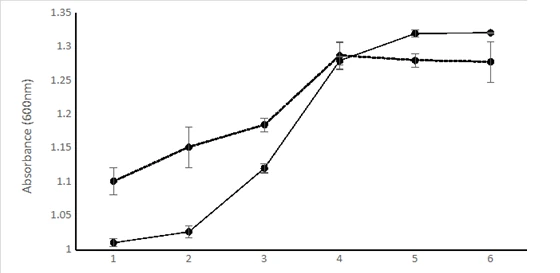
Total antioxidant capacity (TAC) measures the combined ability of all antioxidants in a sample to neutralise free radicals and oxidants. Instead of measuring vitamin C, polyphenols or glutathione one by one, a TAC assay captures their combined, and often synergistic, effect in a single number.
TAC is widely used to evaluate plant extracts, functional foods, nutraceuticals, beverages and cosmetics, and to assess oxidative stress status in serum, plasma and saliva. This guide explains how total antioxidant capacity is measured, which assays to choose and how to report reliable results.
Why Measure Total Antioxidant Capacity?
- Product development: Compare and rank herbal extracts, foods and nutraceutical formulations.
- Quality control: Check batch-to-batch consistency and stability of antioxidant products.
- Label and marketing claims: Provide quantitative evidence for antioxidant claims.
- Clinical and preclinical research: Assess oxidative stress status in biological fluids.
- Processing and storage studies: Track how cooking, drying or shelf life affect antioxidant activity.
How TAC Assays Work: HAT vs SET Mechanisms
Antioxidants neutralise radicals in two main ways, and every TAC assay is built around one or both:
- Hydrogen atom transfer (HAT): The antioxidant donates a hydrogen atom to quench a radical. ORAC and TRAP are HAT-based and closely mimic lipid peroxidation in the body.
- Single electron transfer (SET): The antioxidant donates an electron, reducing an oxidant and causing a colour change. FRAP, CUPRAC and the phosphomolybdenum assay are SET-based.
- Mixed mechanism: DPPH and ABTS work through both HAT and SET.
Because each assay reflects a different chemistry, results from different methods do not always agree. That is why experts recommend using at least two complementary TAC assays.
Key Total Antioxidant Capacity Assays
DPPH Radical Scavenging Assay
Antioxidants reduce the stable purple DPPH radical, lowering absorbance at 517 nm. Simple, fast and low-cost, it is ideal for screening plant extracts. Results are expressed as % inhibition, IC50 or Trolox equivalents.
ABTS / TEAC Assay
The Trolox equivalent antioxidant capacity (TEAC) assay measures decolourisation of the ABTS radical cation at 734 nm. It works in both aqueous and organic systems, so it captures both hydrophilic and lipophilic antioxidants.
FRAP Assay
The ferric reducing antioxidant power assay measures reduction of a Fe³⁺–TPTZ complex to blue Fe²⁺ at 593 nm, at acidic pH. It is fast, reproducible and widely used for plasma and food samples. Note that FRAP does not detect thiol antioxidants such as glutathione well.
CUPRAC Assay
The cupric reducing antioxidant capacity assay reduces Cu²⁺ to Cu⁺ at physiological pH, read at 450 nm. Unlike FRAP, it detects thiol antioxidants, making it well suited to biological samples.
ORAC Assay
The oxygen radical absorbance capacity assay measures how well a sample protects fluorescein from peroxyl radicals generated by AAPH. Being HAT-based, it is considered biologically relevant and is common in food and nutraceutical testing.
Phosphomolybdenum (Total Antioxidant Capacity) Assay
Antioxidants reduce Mo(VI) to a green Mo(V) complex at acidic pH, read at 695 nm. Often called simply the total antioxidant capacity assay, it is popular for plant extracts and is usually expressed as ascorbic acid equivalents.
Supporting Tests: Total Phenolic and Flavonoid Content
TAC results are often paired with total phenolic content (Folin–Ciocalteu method, expressed as gallic acid equivalents) and total flavonoid content (aluminium chloride method, expressed as quercetin equivalents). Strong correlations help explain which compounds drive antioxidant activity.
How to Express TAC Results
- Trolox equivalents (TE): The most common unit, such as µmol TE per gram of extract, allowing comparison across assays.
- Ascorbic acid or gallic acid equivalents: Common for plant and food samples.
- Fe²⁺ equivalents: Standard for FRAP results.
- IC50: The concentration that scavenges 50% of radicals; a lower IC50 means stronger antioxidant activity.
Typical TAC Assay Workflow
- Prepare samples: extract plant or food material, or collect serum, plasma or saliva.
- Prepare a standard curve with Trolox, ascorbic acid or FeSO₄.
- Mix samples with the assay reagent in a 96-well plate.
- Incubate for the set time, protected from light.
- Read absorbance or fluorescence on a microplate reader.
- Calculate results as standard equivalents per gram, millilitre or litre.
Best Practices for Reliable TAC Measurement
- Use at least two assays with different mechanisms, such as DPPH and FRAP, or ABTS and ORAC.
- Run sample blanks for coloured extracts to avoid false readings.
- Keep reaction time, temperature and pH consistent across runs.
- Use dilutions that fall within the linear range of the standard curve.
- For plasma, consider uric acid and albumin, which contribute heavily to TAC.
- Remember that TAC is a chemical measure; confirm biological activity with cell-based assays.
Frequently Asked Questions
What is total antioxidant capacity?
Total antioxidant capacity is the combined ability of all antioxidants in a sample to neutralise free radicals, measured as a single value.
Which is the best assay for total antioxidant capacity?
No single assay is best. Combining a SET assay such as FRAP or CUPRAC with a radical-based assay such as DPPH, ABTS or ORAC gives the most complete picture.
What is the Trolox equivalent?
Trolox is a water-soluble vitamin E analogue used as a standard; results in Trolox equivalents make antioxidant capacity comparable across samples and assays.
Can TAC be measured in blood?
Yes. FRAP, CUPRAC, ABTS and ORAC are commonly used to measure total antioxidant capacity in serum and plasma as an indicator of oxidative stress status.
Conclusion
Assessing total antioxidant capacity provides a fast, cost-effective snapshot of a sample's overall antioxidant power. Choosing complementary assays such as DPPH, ABTS, FRAP, CUPRAC, ORAC and phosphomolybdenum, reporting results in standard equivalents and following good laboratory practice delivers reliable TAC data for product development, quality control and oxidative stress research.